Page 78 - Dark Matter Issue5 Part II
P. 78
on the cabin porch.


This excerpt from my journal, kept while I lived in a one-room cabin in the hills of Vermont in the

winter of 1992, documents a classic January thaw, several consecutive days of above-freezing


temperatures in the midst of winter. In Vermont, winter typically begins in November and ends in

April. In recent years, the dramatic fall and rise in temperatures has mellowed as the climate has


warmed. I feel winter’s identity shifting, and my own changing along with it.


Last winter, in mid-February, my 15-

year-old nephew Kyle and I attended an


art exhibit at

Vermont’s Shelburne Museum, entitled


“32 Degrees: The Art of Winter.” The

curator brought this mixed media


collection together to explore the

identities of snow and ice and to pique


viewers’ nostalgia for the season.

Included in the exhibit were large snow


globes with darkly comic tableaux, a

snow music video game, Monet’s


“Haystacks, Snow Effect,” and three

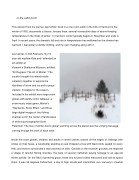
large digital images of tiny fishing


shanties set in the center of landscapes

of white by photographer Scott


Peterman. The loss of winter due to global warming across the planet was the unifying message

coming through the work of each artist.


Inside the snow globes, children and adults in street clothes soared off the edges of icebergs with


smiles on their faces, a woodcutter wielding an axe chopped a tree with black birds seated on every

limb, and wolves surrounded a man perched on stilts. Outside on the museum grounds, we explored


a village of fanciful fishing shanties, the work of several craftsmen paying homage to an age-old

winter activity. On the field of greening grass, these tiny houses looked marooned and odd as space


ships. It was 55 degrees Fahrenheit, a day of high clouds and intermittent sun. January’s snowfall